Did the Response Actually Work?
"When's the last time you heard anybody ever say, 'Can I see a response?'" Chris Jordan on AI in the SOC, identity as the cloud's biggest risk, and why MDR needs to become CDR.
About the webinar
The Microsoft Threat Roundtable was a Fluency Security webinar held on November 17, 2026. Patrick Evans spoke with Chris Jordan, CEO and co-founder of Fluency Security, about why organizations running Microsoft 365 still get breached and what it takes to catch and clean up those attacks. Much of the audience was in Africa. The recording is published in three parts. This is Part 3.
What you're about to read
"When's the last time you heard anybody ever say, 'Can I see a response?'" — Chris Jordan
Patrick asks what an effective security strategy looks like for a Microsoft 365 organization today. Chris answers with three jobs for AI in the SOC, and argues that the third one, checking whether the response actually worked, is the one almost nobody talks about.
You'll read about:
- why skilled people are worth more now, not less, and what AI should do alongside them: detection, root cause and verifying the response;
- why more data sources make for better decisions, and the difference between detection data and investigation data;
- an audience question: is identity the cloud's biggest vulnerability?
- why the next step after MDR is cloud detection and response, and why CrowdStrike doesn't sell a firewall.
Remarks are condensed and edited for readability. Section headings are ours.
Transcript
What an effective strategy looks like
Patrick Evans: The question that comes to mind is this. If I'm in the existing world and I'm a Microsoft 365 user, what would an effective security strategy look like? What would you recommend to people considering getting that security and protecting themselves better?
Chris Jordan: Well, obviously we have a product to help with that, Patrick, so I'm a little corrupt on that answer.
It comes down to a couple of things. One, I do think software is really important, and we have to automate the analysis. AI has gotten to the point where the investigations are really extensive.
The other thing is that even though we want complete automation, and I completely believe we're going in that direction, right now there's still a need for smart people. The people at the MSSPs out there, or the people in companies who actually know what they're doing, are way more valuable now, because I just told you all the mistakes people make when they respond. Yes, it's good to have a product that validates and checks the response, and I'll get into that in a second. But it's really important to still have good people on staff. I'm not saying good people aren't needed. They're needed more than ever, because we're making more decisions, and their decisions are very valuable.
Three things AI should do in the SOC
Chris Jordan: But AI needs to help out, and AI can help us with three things.
The first, in an AI SOC, is the detection piece. Is this an issue? Do I see the compromise? That's numero uno.
The second is: give me the root cause. Now I'm backtracking to see how this event occurred. I might have multiple issues, but I still want to stop the problem where it began. That's what we call root cause analysis. What's the extent of this? How did it get in? Did I miss a signature? That's a big piece on the response side.
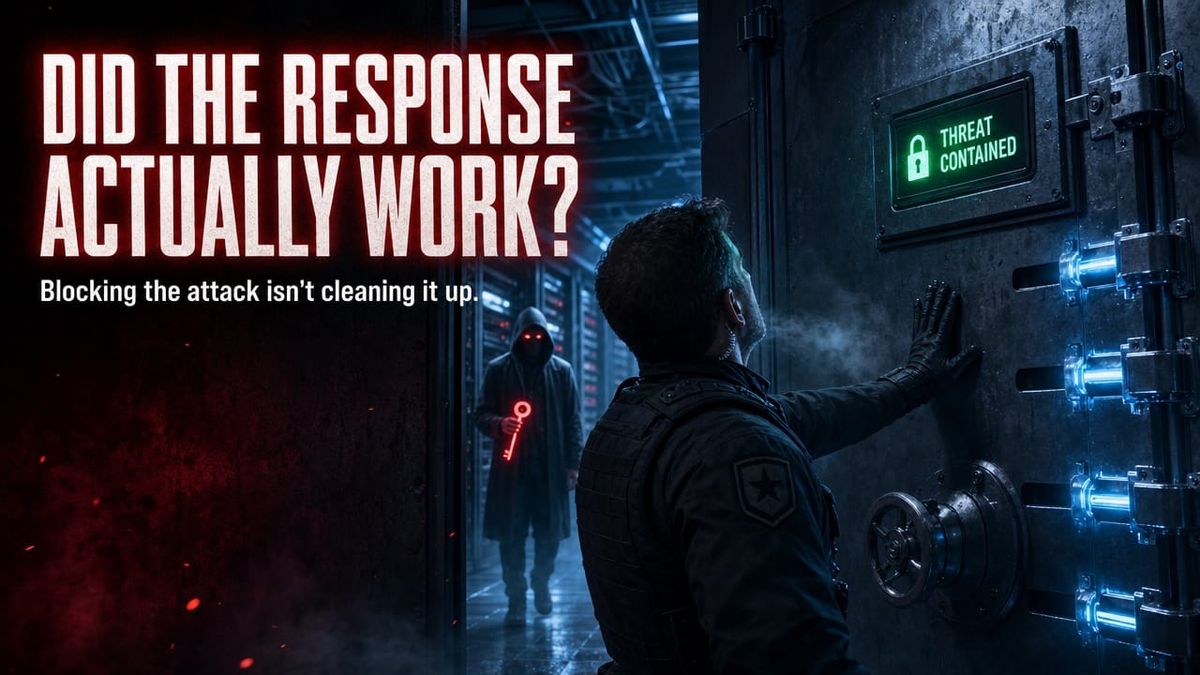
And the last thing we can do, by looking at the audit trail, believe it or not, is ask: did I see your response?
Think about it. Your conversations with probably every security company are about "Can I detect it? Can I prevent it?" When's the last time you heard anybody ever say, "Can I see a response?" But that's just as critical. If the system responded, and responded correctly, great. But when it fails to quarantine, when it fails to remove the Entra ID device, there's a bunch of other things that need to get done, and most of the time it's not just one thing.
The smart person knows what to do. But the smart person isn't always there, and they're not always in smart mode. I hate to say it. We all make mistakes. So having AI there to help you is really important.
It was called Copilot for a reason: it was there to help you. To tell you the truth, now it's kind of the pilot, and you're the copilot. You're looking over its shoulder, helping it make decisions and implement them. I think that's the next logical move before we go to full AI.
The more notes, the better you name the tune
Patrick Evans: You and I have known each other for a while now. One thing you've said from the day we met, and it wasn't always the case with other vendors, is that the more data you source, the better you're able to determine whether something's going on.
Chris Jordan: I'm kind of laughing. We had a discussion yesterday where I was trying to streamline everything and say, "Only focus on Microsoft 365." And my co-founder said, "You wrote about orchestration 10 years ago, and it's needed now." What he's saying is: yes, I can see something in Office 365, but I can also see the same issue in SentinelOne, or in the firewall. The more points of data I have, the better off I am.
We used to have a television show called Name That Tune. They'd play a piece of music, and the more notes you heard, the more sense it made which song it was. The only reason anybody could do it with one note was the hints they gave you. You were really answering the hints, not the notes.
That's the thing here. The more notes you have, the more different pieces of information, the better your decision and the better your detection.
Let's take something that isn't an exploit: DLP, data loss prevention. Say I'm watching my AI usage, and I get an alert: "My LLM just saw a Social Security number entered." Great, I detected it, and that user shouldn't have pasted that. But what if Microsoft also says, "I saw it come through this email," or CrowdStrike says, "I saw it come from this USB drive"? Now I can tie it together and answer where that data came from. That's a really important question.
A lot of the time in security, we're just happy we caught something. But the real question is what happened, and understanding an event from beginning to end requires multiple pieces of information. Sometimes it's called telemetry data. It's data I'm not going to use to detect, but I am going to use it to investigate.
Is identity the cloud's biggest vulnerability?
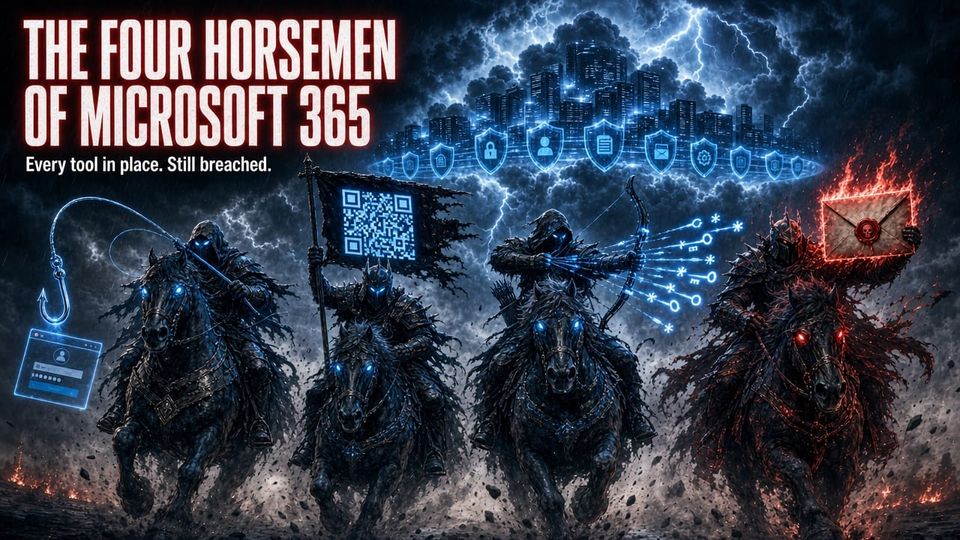
Patrick Evans: Thanks, Chris. We're getting to the end of the half hour we set aside. Sabelo has posed a question. Hi, Sabelo, it's good to see you on the call. He asks: all four horsemen, adversary in the middle, device-code phishing, BEC and passkey downgrade, end with an attacker holding a legitimate identity or session token rather than exploiting a technical flaw in the cloud platform itself. Does that mean IAM is the cloud's biggest vulnerability?
Chris Jordan: I'd say it used to not be, but it is. Here's the reason. Your access comes down to a token. It doesn't matter if you go to biometrics or whatever; it switches over to a certificate.
When we as hackers... I shouldn't put myself in that group. When hackers play capture the flag, what do you think the flag was? It was a certificate. We've been doing certificate attacks since the mid-'90s: how do I grab a certificate to validate a position? And that's exactly how IAM works. Which certificate represents me? That's how we've done authentication. So yes, if I grab that certificate, I am you.
I had a customer say once, "Well, you grabbed that certificate, but I still have Entra ID. I'm validating your machine." And we watched the attacker steal the certificate. Then what did they do? They kept the session alive. They kept pinging it, because once that session was in, Entra ID had already accepted it, and the attacker could keep exploiting it. Granted, they weren't going to get in a second time, because they didn't have the Entra ID position. But they owned that session, and they were in as long as they wanted to be.
So identity is definitely one of them. That doesn't mean the technical vulnerability you bring up, an exploit, goes away. We just saw one the other day where somebody did, believe it or not, a SQL injection. Little Bobby Tables. They got in and exploited somebody because there was a technical weakness. That kind of exploit normally runs at the level of the process or thread that was running it, and then it just does a callback, and they're in. A callback from the exploit payload is the most common technique.
So it's not always identity, but identity plays a role in access control no matter what you do.
Patrick Evans: Thanks, Chris. I see Charles chipped in as well: identity is, in fact, the perimeter today.
From MDR to CDR
Patrick Evans: On a lighter note, you and I have been debating MDR for Microsoft 365, and then we expanded it, because of the cloud argument, to say the new thing probably needs to be CDR, cloud detection and response, rather than just MDR for Microsoft. Any thoughts since we started that conversation?
Chris Jordan: We all accept MDR as something we want in business. But MDR is really only focused on EDR. We don't have that same capability for our email systems, our cloud systems, for AWS. There's a huge gap between all the money we spend on the desktop and the rest of our infrastructure.
This is a long conversation, but listen. CrowdStrike is a very interesting company. They put their finger in everything. They now have Guardian, for AI security. You know the one product CrowdStrike doesn't have? A firewall. There's no firewall in the CrowdStrike inventory.
The reason is that most companies no longer run a DMZ, with an infrastructure of their own services exposed on their network. They run their entire infrastructure as services in the cloud. For the most part, there's no need for a firewall anymore. Yes, we should look at where people are going, and that's the one thing we use it for. But if we have something on everybody's endpoint, we're mimicking the same capability. We just need to find rogue endpoints. That's the strategy most EDR companies take, CrowdStrike and SentinelOne alike. SentinelOne has a tool called Ranger designed to find rogue devices.
So this style, lock down every device with EDR and put everything else in the cloud, is the playbook for pretty much the whole modern industry.
Summary
Good people matter more, not less. Chris believes security is heading toward full automation, but today the people at MSSPs and in-house who know what they're doing are more valuable than ever, because they're making more decisions. AI should work alongside them, now more as the pilot with the human as copilot.
AI has three jobs in the SOC:
- Detection. Is this an issue? Do I see the compromise?
- Root cause. How did it get in, how far did it go, and did a signature miss it?
- Verifying the response. Using the audit trail to confirm the fix actually happened: the quarantine worked, the attacker's Entra ID device was removed, and every other step got done. "When's the last time you heard anybody ever say, 'Can I see a response?'"
More data sources make for better decisions. Like Name That Tune, the more notes you have, the easier it is to name the song. A DLP alert from an AI tool tells you sensitive data was entered. Microsoft or CrowdStrike data can tell you where it came from. Some telemetry is used for investigation rather than detection.
Identity is now the cloud's biggest vulnerability, but not the only one. All four horsemen end with the attacker holding a legitimate token or certificate. Once a stolen session is accepted, attackers keep it alive for as long as they want. Technical exploits like SQL injection still happen, but identity plays a role in access control no matter what.
From MDR to CDR. MDR covers the endpoint, but not email, the cloud or AWS. CrowdStrike sells almost everything except a firewall, because the modern playbook is EDR on every device and everything else in the cloud. That leaves the cloud as the gap that needs its own detection and response.
References
Microsoft Threat Roundtable
- Part 1: Why Microsoft 365 Gets Breached with Every Tool in Place (blog) — https://blogs.fluencysecurity.com/why-microsoft-365-gets-breached-with-every-tool-in-place/
- Part 2: EDR Doesn't Cover the Cloud (blog) — https://blogs.fluencysecurity.com/edr-doesnt-cover-the-cloud/
- Part 3: Did the Response Actually Work? (video) — https://youtu.be/TWexNiDzN5I
Fluency Security
- How Attacker in the Middle Works (explainer video) — https://youtu.be/8RQtEPAaY5k
- Investigating AiTM Session Theft in Microsoft 365 (SOC walkthrough video) — https://youtu.be/V-RlBjXdcbY
- How Device-Code Phishing Works (explainer video) — https://youtu.be/EXkG4jhg4QY
- From Microsoft Threats to Faster Investigations (Reimagining SOC Services, Part 1, blog) — https://blogs.fluencysecurity.com/from-microsoft-threats-to-faster-investigations/
Microsoft and others
- Token theft playbook (Microsoft Learn) — https://learn.microsoft.com/en-us/security/operations/token-theft-playbook
- Revoke user access in Microsoft Entra ID (Microsoft Learn) — https://learn.microsoft.com/en-us/entra/identity/users/users-revoke-access
- Steal Web Session Cookie, T1539 (MITRE ATT&CK) — https://attack.mitre.org/techniques/T1539/
- Exploit Public-Facing Application, T1190 (MITRE ATT&CK) — https://attack.mitre.org/techniques/T1190/
- SQL injection (OWASP) — https://owasp.org/www-community/attacks/SQL_Injection
- Exploits of a Mom, "Little Bobby Tables" (xkcd 327) — https://xkcd.com/327/