
In the World of AI, Are you Valuable?
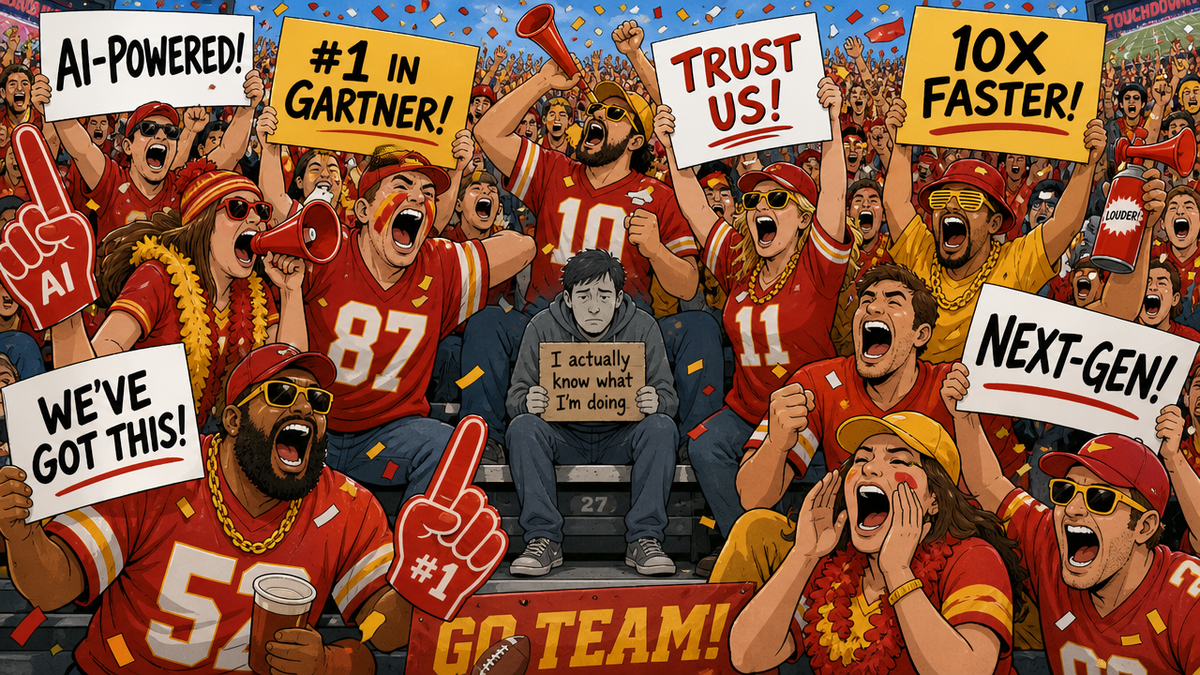
I recently met the owner of a good company that is likely to go out of business. Every company loses customers, and he can survive that. What he can't survive is being unable to win new ones, because prospective buyers now believe AI can do what his company does. Many companies face that same belief, which is why we're asking: in the world of AI, are you valuable?
To answer that, we first have to be clear about what value is. Take a company that outsources its security to a SOC. It expects the SOC to review every event and flag the ones that need attention: an actual compromise, or a threat that could lead to one. The value is simple. If a machine is compromised, the company wants to know right away and wants it fixed, because it can't do business with infected machines or ransomware. Many organizations now believe they can get that value without a SOC. They plan to send their alerts straight to an AI and let it resolve them, either directly or through middleware they build themselves.
Anyone who has done this work knows how hard it is. Every step is uncertain. Did we detect the problem? Did we analyze it correctly? Did we respond the right way?
Every buyer is being sold to all the time. It comes through marketing, through YouTube videos, through analyst firms like Gartner that vendors pay to be placed in. Very little of it is about results. It's hype, references you can't check, and so much noise that you stop trying to sort it out. The pitch is built on fear, uncertainty and doubt. It names your needs, promises to meet them, and repeats that promise until it sounds true. It never has to prove it meets those needs correctly, only somewhat. AI is the newest tool in this machine, and it may be the best one yet at convincing you.
The attacker doesn't care. Reality doesn't care about the hype, about why you bought something, or about what you believed it could do. Reality is the playing field of business, and the winners don't buy by the same rules as the followers. They take chances. They don't buy on brand. They focus on results, on process, and on quality.
So where is your value? A customer who buys the hype may well get hacked eventually, but that does nothing for you in the meantime. You're still without their business. The question is how to change that, and part of the answer is a hard lesson: delivering results isn't enough.
Results aren't enough because they have to be recognized. One of our customers, one I especially respect, always thinks about the work from their own customer's point of view, and they taught us this. We used to deliver results as numbers: spreadsheets, events, tickets, statistics. We assumed that doing good work and showing the statistics was enough. It wasn't, because the customer didn't understand what the numbers meant. The results you deliver have to empower the customer. If you hand them a finished result they simply consume and never act on, you've taken away their job.
That's why customers ask for dashboards and reports. It isn't that they want to read them. They want to be empowered by them. Your value isn't the end of the work. It's as much a starting point as it is a solution. So when we look at AI designs like the AI SOC, the scope of the work is more than closing tickets.
Why does this matter? Isn't it enough to detect something and stop it? It isn't, because the customer is uncertain, just as the work itself is uncertain. The truth is that if you called every alert a false positive, you'd be right 98 percent of the time. The customer is simply giving you their trust. The value is in knowing the other two percent, and AI isn't going to give you that.
When we started, the question had two sides. One is whether AI can really do your work. The other is what your work is for. As the cheese moves and AI really does start delivering better results, the question becomes: was that all you were delivering?
That's the real answer. Our results and our quality have value, but the customer rarely sees it. By the time they've bought something else and watched it fail them, you've lost the opportunity, and they never get to see what you can do. There's also a great deal of value beyond the result itself: how you delivered it, how you communicated, and how you support it after the job is done.
So what is your value? You see the problem and the process as a whole, in a way AI doesn't. AI lacks that creativity and that body of knowledge. It goes down rabbit holes, and it's very bad at keeping the overall need and the overall result in view. That is why customers buy from you: for the overall result, and for how you support them in meeting their overall need.
To wrap it up, ask yourself where your value is. Stop measuring it by whether you solved the problem, because AI and marketing will convince people that a bad solution did that too. Small companies have always faced this, and they survive by doing one thing large companies can't: listening to their customers and seeing what they actually need. It seems as though big companies could, but they can't, because they have to meet the average need across hundreds of thousands of customers. A small company can focus on what this customer needs and help them accomplish the reason they're doing the work in the first place.